
GLP1s
.png?width=1800&height=1000&name=Home%20Testing%20Blog%20(16).png)

If you've been researching GLP-1 weight-loss injections — such as Mounjaro and Wegovy — you may have also heard talk of the body's "set point." But what is a set point? How does it influence long-term weight loss? And why do GLP-1 medications seem to work when traditional dieting often fails?
This evidence-based guide explains:
|
||
|
||
|
||
|
||
|
Reviewed by Julie Boora, Superintendent Pharmacist, TribElle Health Ltd (GPhC Reg. 9012688)
GLP-1 (glucagon-like peptide-1) receptor agonists are medications that mimic the natural hormone GLP-1, which is released after eating. They help regulate appetite, control hunger signals in the brain, and improve metabolic functions.
Two widely prescribed options include:
|
Wegovy Contains semaglutide — a GLP-1 receptor agonist. Learn more in our GLP-1 guide → |
Mounjaro Contains tirzepatide — a dual GLP-1/GIP agonist. Compare both medications → |
Both are administered as once-weekly injections and have strong clinical evidence supporting their effectiveness for weight loss and metabolic health.
The weight set point refers to the idea that each person's body has a preferred or biologically regulated weight range. When you lose weight rapidly through dieting, your body often activates compensatory mechanisms such as:
|
||
|
||
|
||
|
For women — particularly those in perimenopause, where hormonal shifts amplify these responses — this makes keeping weight off especially challenging. Read our perimenopause and GLP-1 guide →
Why it matters
Traditional dieting often fails because it does not alter the physiological drivers of weight regulation — like appetite and metabolic compensation. It fights the biology. GLP-1 medications work with it.
Unlike calorie-focused diets alone, GLP-1 receptor agonists work on pathways that directly influence the neurological and metabolic drivers of appetite — effectively shifting the set point over time.
| 1 |
Appetite regulation GLP-1 injections act directly in the brain's hunger and reward centres to reduce appetite and food reward drive — quieting the "food noise" that makes dieting so exhausting. |
| 2 |
Slower gastric emptying Food stays in the stomach longer, enhancing fullness and reducing the urge to eat again soon after a meal. |
| 3 |
Hormonal balance They may reduce hunger signalling hormones and improve insulin sensitivity, making your body more receptive to sustained weight changes rather than fighting to restore the old set point. |
This combination helps reset many of the biological drivers that worked against you during dieting.
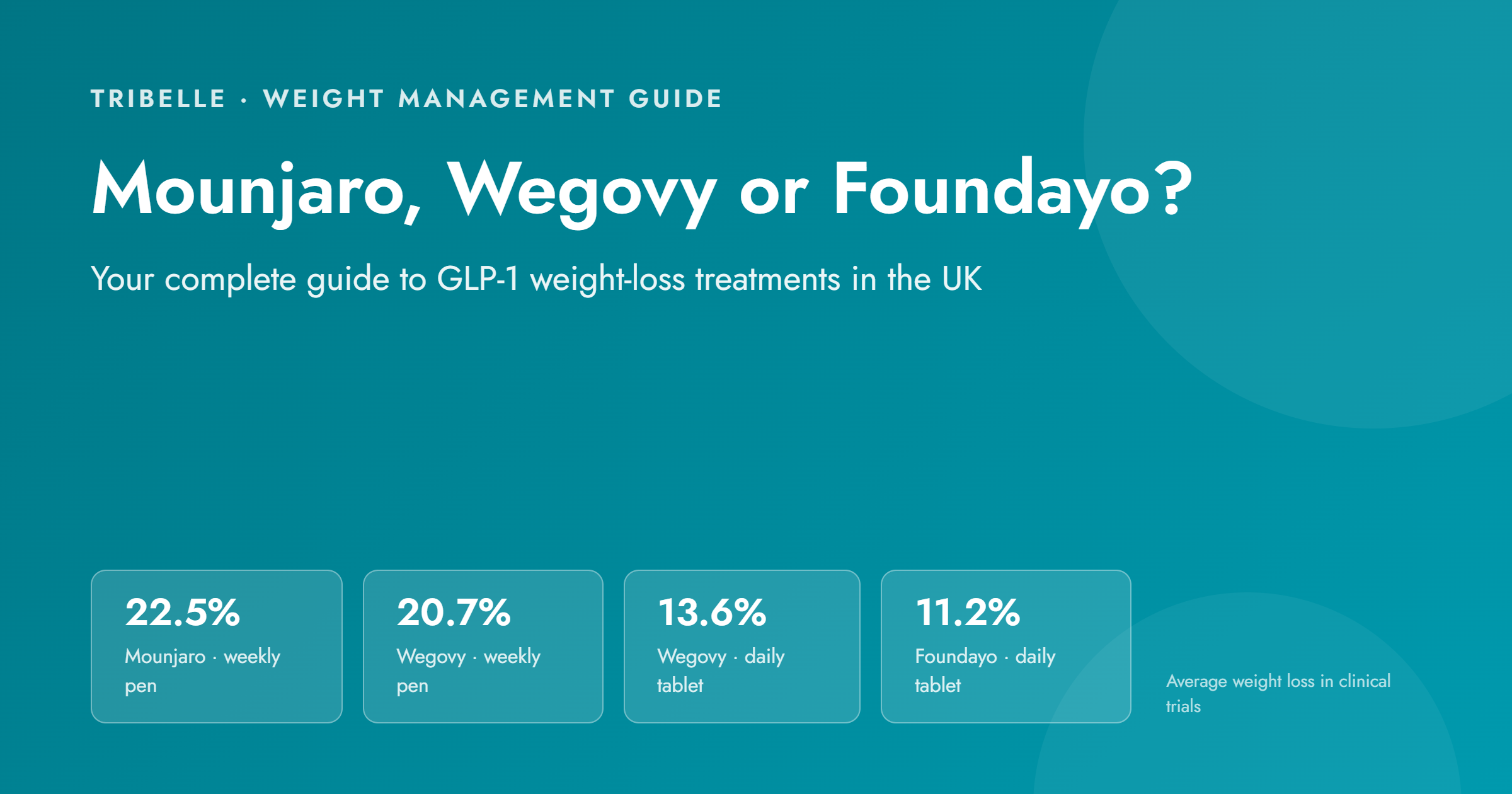
Wegovy (semaglutide) — STEP programme
|
||
|
||
|
Mounjaro (tirzepatide) — SURMOUNT-1
|
||
|
||
|
These findings suggest that GLP-1 (and dual-agonist) therapies impact the biological feedback loops that regulate appetite and weight — shifting the body's perceived set point rather than merely suppressing hunger short-term.
| Factor | Traditional dieting | GLP-1 medications |
|---|---|---|
| Appetite regulation | Weak | Strong |
| Hunger hormone response | Increases | Decreases |
| Metabolic compensation | High | Reduced |
| Long-term maintenance | Low | Higher with support |
| Clinical evidence | Limited | Strong (STEP, SURMOUNT) |
These treatments can make weight loss more achievable, but they are not a "switch off" button for your body. GLP-1 medications work on biology — they do not override it entirely, and they do not remove the need for effort, consistency, or support.
What "more achievable" actually means
|
||
|
||
|
||
|
Sustainable results usually come from combining medication with long-term lifestyle support and realistic expectations. The medication opens the door — but you still have to walk through it.
| Myth |
You will regain all the weight once you stop |
| Reality |
Weight regain is possible if lifestyle support is not sustained, but GLP-1 medications can give you a window where appetite signals normalise so that healthier habits take root. |
| Myth |
GLP-1 medications are just "diet pills" |
| Reality |
These are medical therapies targeting the underlying physiological drivers of obesity — not a shortcut or a substitute for lifestyle change. |
To make the most of GLP-1 therapies and support a healthier set point:
|
|
||||
|
|
Set point shift is strongest when medication and lifestyle changes are aligned.
Appetite suppression can begin within weeks, with meaningful weight loss often seen within 3 to 6 months. Results depend on dose, lifestyle, and individual response.
Weight regain can occur unless lifestyle habits — nutrition, movement, behavioural support — are maintained after stopping. This is why building sustainable habits during treatment matters so much.
They don't "speed up" metabolism directly, but they reduce hunger hormones and improve insulin signalling — reducing the metabolic compensation that makes dieting so difficult to sustain.
Typically adults with a BMI of 30 or above, or 27 or above with at least one weight-related health condition. Eligibility also depends on medical history and is assessed during a clinical consultation. See our full GLP-1 guide for more →
Yes — decades of research support the concept of biological weight regulation, including leptin signalling and hypothalamic control of appetite. GLP-1 medications interact directly with these pathways, which is why their effects go beyond simple calorie restriction.
Bottom line
GLP-1 weight-loss injections like Wegovy and Mounjaro go beyond simple appetite suppression. By targeting the neurological and hormonal mechanisms that govern hunger and weight regulation, they help overcome biological resistance — the "set point" — that makes long-term weight loss so hard.
But they are a tool, not a solution. To use them effectively:
|
||
|
||
|
GLP-1 therapy doesn't just help you lose weight — it can help your body accept a new, healthier range over time.
Read more from TribElle
| GLP-1 weight loss injections: what you need to know → |
| Mounjaro vs Wegovy: which is right for you? → |
| GLP-1 and perimenopause: what women need to know → |
This is why our platform exists. We're building a bigger, stronger tribe for women — a space where you're seen, heard, and supported.
Because every woman deserves healthcare that sees her, hears her, and heals her.
Supporting your body during weight loss treatment can make all the difference. From vitamins to collagen support, we've got you covered.
| GLP-1 Support Pack £25 |
| Perfectil Collagen Skin £39.99 |
| Perfectil Collagen Hair £39.99 |
Sources
| Wilding JPH et al. (2021) — Once-Weekly Semaglutide in Adults with Overweight or Obesity — NEJM |
| Jastreboff AM et al. (2022) — Tirzepatide Once Weekly for the Treatment of Obesity — NEJM |
© TribElle Health Ltd · GPhC Registration 9012688 · tribelle.co.uk · This content is for informational purposes only. Always consult a qualified healthcare professional.
Explore treatments
GLP-1 injections, expert clinical support and a plan built around your body.
See weight loss treatments →Jon the conversation
|
|||
|