
GLP1s
.png?width=1200&height=628&name=Week%20of%207th%20April%20(50).png)

Obesity Is Now Recognised as a Chronic Disease
In the UK, the National Institute for Health and Care Excellence (NICE) recognises obesity as a chronic, relapsing disease requiring structured medical management rather than short-term behavioural intervention.
This classification reflects modern understanding that obesity is driven by:
Obesity is not simply excess adiposity. It is a state of altered biological regulation.
Like hypertension or type 2 diabetes, it typically requires ongoing treatment.
A chronic condition is one that:
We do not "cure" hypertension. We manage it.
We do not prescribe antihypertensives for six months and expect blood pressure to remain permanently controlled.
The same principle now applies to obesity.
Body weight is regulated around a defended "set point", mediated through:
When weight is reduced through calorie restriction alone, the body compensates by:
This biological resistance explains high relapse rates following diet-only interventions.
In the UK, GLP-1 receptor agonists such as:
are prescribed for chronic weight management under specific eligibility criteria.
These medications act centrally and peripherally to:
They do not simply "reduce calories". They modify the biological drivers of obesity.
Semaglutide: STEP Programme
The STEP 1 trial (Wilding et al., New England Journal of Medicine, 2021) demonstrated:
However, the STEP 4 withdrawal study showed that when semaglutide was stopped:
Participants regained two-thirds of lost weight within one year
This strongly supports obesity as a chronic, relapsing condition requiring continued treatment.
Tirzepatide: SURMOUNT Programme
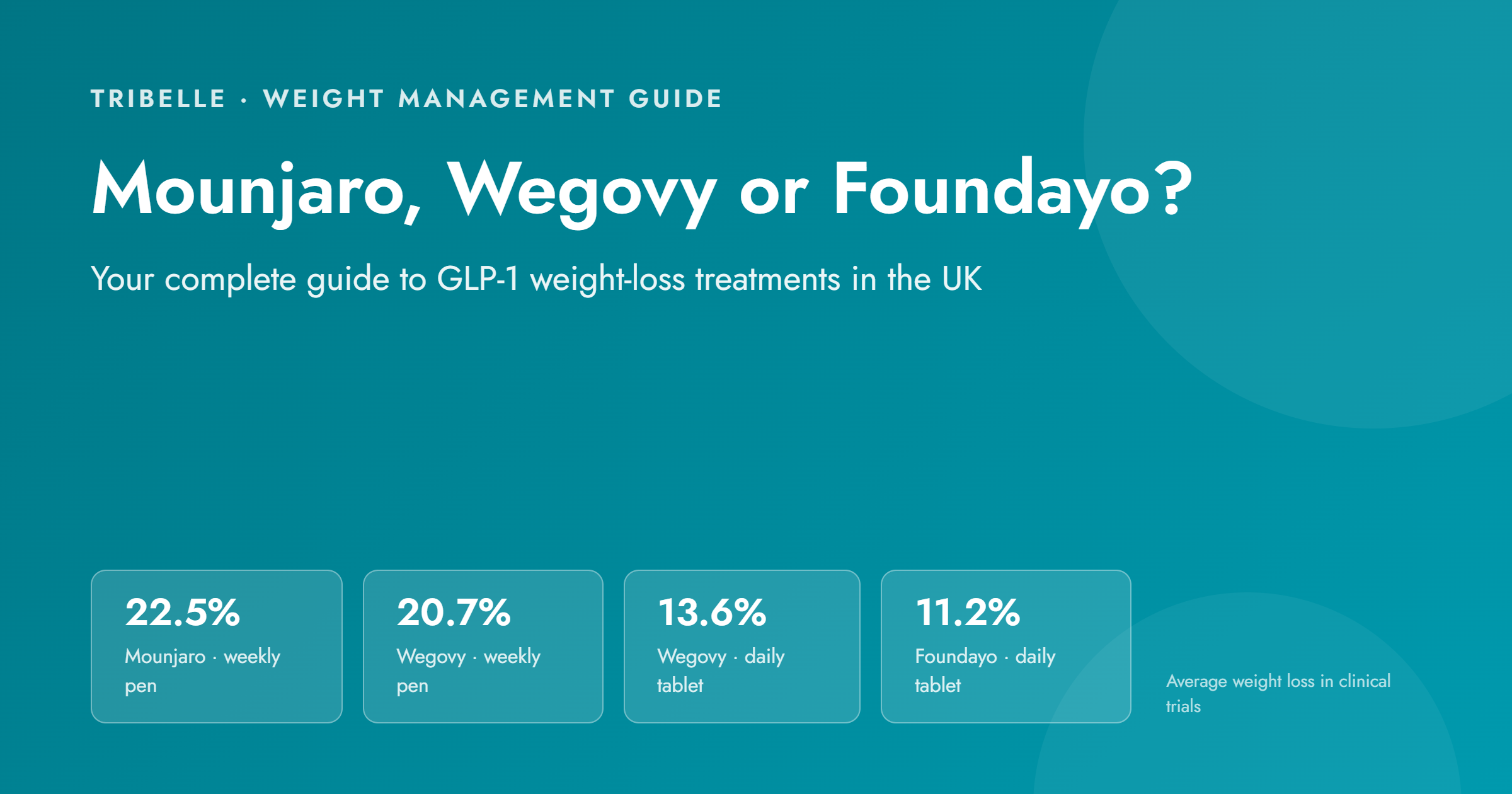
The SURMOUNT-1 trial (Jastreboff et al., NEJM, 2022) reported:
Emerging data similarly suggest weight regain occurs after discontinuation.
The pharmacological effect persists only while treatment continues, as with antihypertensives.
Consider blood pressure medication:
No clinician interprets this as "treatment failure".
Similarly:
Weight regain does not mean the medication "stopped working".
It means the disease remains active.
Yes.
Reduced hunger, diminished food preoccupation ("food noise"), and earlier satiety indicate:
These are clinical markers of therapeutic response.
Weight loss itself is a downstream effect of hormonal normalisation.
NICE obesity guidance supports pharmacological therapy as part of:
Increasingly, UK clinicians recognise that for many patients:
Long-term pharmacotherapy may be appropriate, analogous to chronic cardiovascular management.
The framing is shifting from short-term "weight loss treatment" to long-term metabolic disease management.
"Should I stop once I reach my goal weight?"
From a chronic disease perspective, discontinuation often results in relapse.
Dose adjustment or maintenance strategies may be appropriate, but abrupt cessation without a plan increases risk of regain.
"Does needing long-term medication mean I've failed?"
No.
Needing treatment reflects biology, not character. We do not interpret the need for lifelong levothyroxine as a moral failing. Nor should we do so with obesity.
Beyond weight reduction, GLP-1 therapies improve:
Long-term cardiovascular outcome data for Semaglutide show reduced major adverse cardiac events in high-risk populations. Lincoff et al., NEJM 2023
Thus, the rationale for continuation extends beyond aesthetic weight reduction.
Obesity is:
GLP-1 medications:
Stopping treatment removes that regulatory support.
Executive Summary
Is obesity a chronic disease according to NICE?
Yes. NICE recognises obesity as a chronic condition requiring long-term management.
Do GLP-1 medications need to be taken long term?
For many patients, yes, similar to blood pressure medication.
Does weight regain after stopping GLP-1 mean it failed?
No. It reflects reactivation of the underlying disease process.
Is reduced appetite a sign GLP-1 is working?
Yes. Appetite suppression indicates effective receptor activity.
The shift in UK medicine is conceptual as much as pharmacological.
We are moving from:
"Why can't patients maintain weight loss?"
to
"How do we sustainably manage a chronic metabolic disease?"
GLP-1 therapies represent a mechanistic intervention into appetite regulation.
For appropriately selected UK patients, continuation should be viewed not as dependency, but as disease control.
Just as we would not withdraw antihypertensive therapy in a patient whose blood pressure has normalised, we should not reflexively withdraw GLP-1 therapy in a patient whose metabolic regulation has improved.
Obesity management is entering its era of long-term medicine.
How Can TribElle Help?
We're not here to sell you a dream. We're here to back you up with:
Expert consultations with female-led clinicians who understand the mental and hormonal load.
Safe prescriptions with support every step of the way - including choosing between Wegovy and Mounjaro.
Ongoing check-ins, supplement guidance, and reorder options that don't make you jump through hoops.
And if you're still unsure? That's okay. Your body, your timeline.
Explore treatments
GLP-1 injections, expert clinical support and a plan built around your body.
See weight loss treatments →Join the conversation
|
|||
|