
GLP1s
-2.png?width=1800&height=1000&name=Home%20Testing%20Blog%20(5)-2.png)

As someone going through the perimenopause and who has struggled with weight gain, I wanted to write this blog for women facing the same challenge.
During perimenopause, hormonal shifts — especially declining oestrogen — increase fat storage, particularly around the abdomen, and disrupt hunger signals.
The numbers
During this phase and into postmenopause, studies show a consistent annual weight gain of 1.5 lbs (approximately 0.7 kg), driven chiefly by:
|
||
|
||
|
Fat distribution changes during perimenopause, and women often experience increased abdominal or visceral fat — even if total weight does not dramatically rise. This carries health risks linked to insulin resistance, diabetes, cardiovascular disease, and reduced overall wellbeing.
At the same time, muscle mass declines, reducing basal metabolic rate and making traditional diet and exercise less effective than before. Verywellhealth
Even women who stick to healthy diets and regular movement can struggle during this transition. Here's why:
|
Lower oestrogen Reduces appetite regulation and shifts fat to the abdomen |
Sleep disruption Worsens metabolism and raises hunger hormones |
|
Increased fatigue Reduces activity levels and motivation to exercise |
Muscle loss Slows metabolism making calorie restriction less effective |
Lifestyle interventions like strength training, better nutrition, and stress management remain vital — but may require more effort to achieve results. Verywellhealth, pmc.ncbi.nlm.nih.gov
Yes — GLP-1 medications can help with perimenopause weight gain, but they are not a complete solution on their own. Medications like semaglutide and tirzepatide work by: Read our full GLP-1 guide for more on how these medications work →
|
||
|
||
|
||
|
GLP-1s can support weight loss — but best results come when combined with strength training, adequate protein, and hormone support if needed.
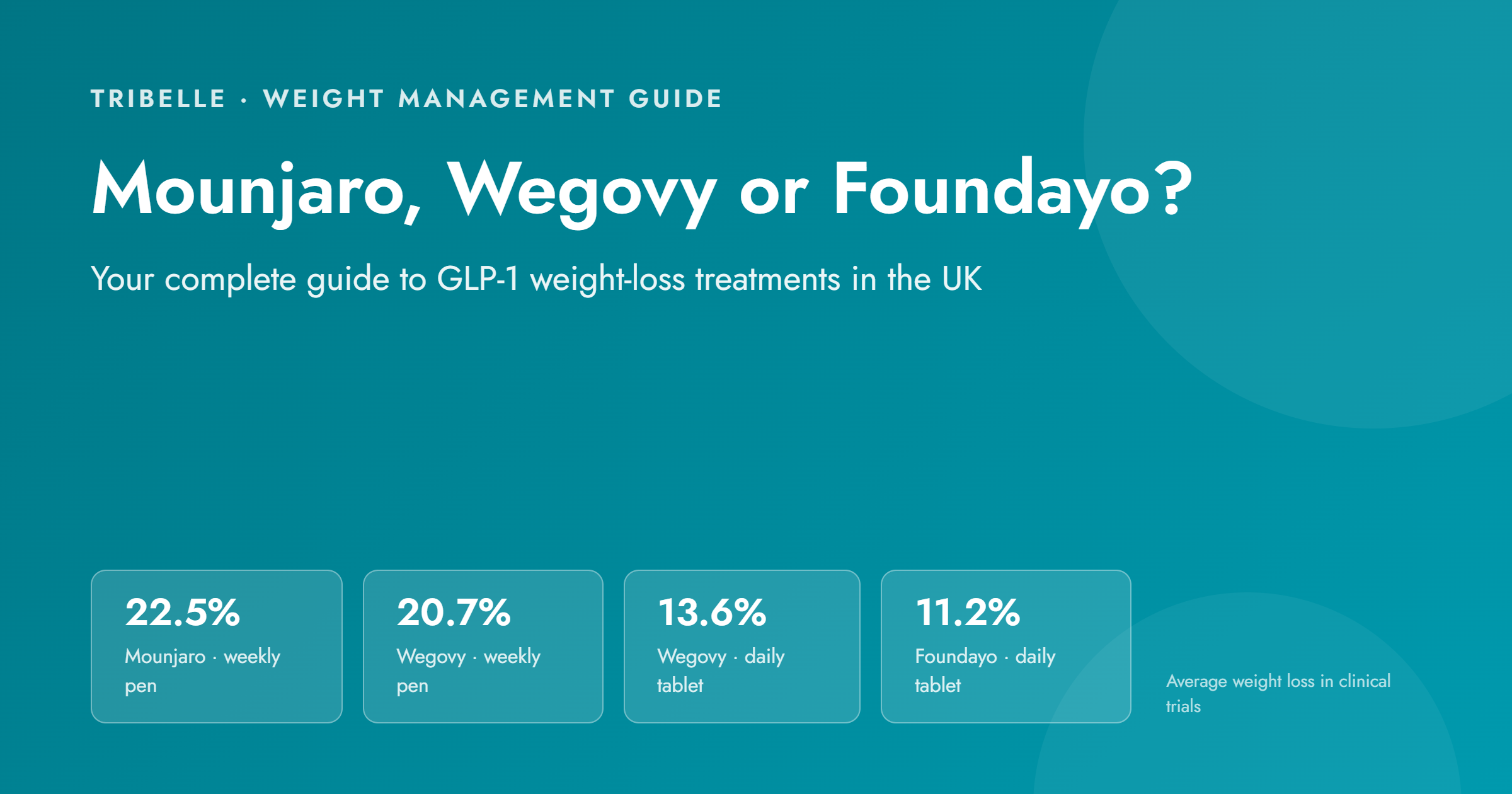
Mounjaro vs Wegovy — what the data shows for women in perimenopause. See our full Mounjaro vs Wegovy comparison →
|
Semaglutide (Wegovy) ~15% Average body weight loss Over 68 weeks, paired with lifestyle changes |
Tirzepatide (Mounjaro) ~20% Average body weight loss SURMOUNT trials, including menopausal women |
A post-hoc analysis of the SURMOUNT trials confirmed similar benefits across pre-, peri-, and post-menopausal women, with average weight loss around 20% and significant reductions in waist circumference — key for reducing metabolic risk. nyp.org
Women using hormone replacement therapy (HRT) alongside semaglutide may experience enhanced weight-loss outcomes, perhaps reflecting synergistic effects on metabolism.
HRT addresses the hormonal drivers of weight gain — declining oestrogen, fat redistribution, sleep disruption. GLP-1 medications address appetite and metabolic regulation. Together, they can:
|
||
|
||
|
|
||
|
||
|
||
|
||
|
In perimenopause and menopause, weight gain — especially around the abdomen — is driven by hormonal shifts, slowed metabolism, and changes in fat distribution. sciencedirect.com
While lifestyle efforts remain foundational, many women find traditional approaches insufficient. GLP-1 agonists like semaglutide and tirzepatide offer a promising addition for those struggling with midlife weight challenges.
Combining these medications with HRT and lifestyle changes may deliver even stronger results — though they require careful medical supervision and an understanding of side effects. nyp.org
Perimenopause causes weight gain primarily due to declining oestrogen levels. Lower oestrogen can shift fat storage to the abdomen, reduce insulin sensitivity, increase appetite and cravings, and disrupt sleep — which affects hunger hormones. At the same time, age-related muscle loss slows metabolism, meaning your body burns fewer calories at rest.
Yes, GLP-1 medications can help reduce menopause belly fat by lowering appetite and improving metabolic health. Medications like semaglutide and tirzepatide reduce calorie intake, improve blood sugar control, and support overall fat loss, including abdominal fat. However, they do not specifically target belly fat or fix the hormonal changes driving fat redistribution.
Neither is universally better — both are effective. Mounjaro (tirzepatide) often leads to greater weight loss due to its dual GLP-1 and GIP hormone action. Wegovy (semaglutide) is well-established with strong appetite suppression. The best choice depends on your medical history, side effect tolerance, cost, and how your body responds. A personalised consultation is the best starting point.
Yes, HRT and GLP-1 medications can usually be taken together safely under medical supervision. HRT addresses hormonal causes of weight gain — low oestrogen, poor sleep, fat redistribution — while GLP-1 drugs reduce appetite and improve metabolism. There is no strong evidence of harmful interactions between standard HRT and GLP-1 treatments like semaglutide.
GLP-1 medications are generally safe in menopause when prescribed and monitored by a healthcare professional. Key considerations for midlife women include maintaining muscle mass, getting enough protein and nutrients, and managing digestive side effects. They may not be suitable for people with a history of certain thyroid cancers or pancreatitis. Perimenopause itself is not a contraindication.
Weight loss is harder in your 40s due to a combination of hormonal shifts, muscle loss, and lifestyle pressures. Declining oestrogen affects fat storage and appetite. Loss of muscle mass slows metabolism. Poor sleep increases hunger hormones (ghrelin) and reduces fullness hormones (leptin). Higher stress raises cortisol, promoting fat storage. These changes mean your body becomes more efficient at storing fat and less responsive to traditional dieting.
Read more from TribElle
| GLP-1 weight loss injections: what you need to know → |
| Mounjaro vs Wegovy: which is right for you? → |
This is why our platform exists. We're building a bigger, stronger tribe for women — a space where you're seen, heard, and supported.
Whether you're navigating perimenopause, weight gain, or simply seeking better information, our mission is to empower you with resources, education, and community.
Because every woman deserves healthcare that sees her, hears her, and heals her.
Supporting your body during weight loss treatment can make all the difference. From vitamins to collagen support, we've got you covered.
| GLP-1 Support Pack £25 |
| Perfectil Collagen Skin £39.99 |
| Perfectil Collagen Hair £39.99 |
Sources
© TribElle Health Ltd · GPhC Registration 9012688 · tribelle.co.uk · This content is for informational purposes only. Always consult a qualified healthcare professional.
Explore treatments
GLP-1 injections, expert clinical support and a plan built around your body.
See weight loss treatments →Join the conversation
|
|||
|