
GLP1s
.png?width=1200&height=628&name=Week%20of%207th%20April%20(43).png)
.png?width=48&height=48&name=Untitled%20design%20(23).png)
Let's be real: if you've found yourself searching "why can't I lose weight?", "Why do I regain weight so easily?" or "Why is weight loss harder in my 40s?" You're not alone.
Weight loss is rarely just about willpower. It is influenced by biology, hormones, appetite regulation, stress, sleep, medications, menopause, and the environment we live in. Yet so many people still carry the shame of struggling, as though it is a personal failure.
You may also be asking, 'Where can I find information on GLP1s?', Which online GLP1 provider can I trust?' or 'Where can I speak to a clinician if I'm worried about using GLP1s?'
At TribElle, we will provide answers to all those questions.
Weight management is a health issue, and for many people it requires more than generic advice to "eat less and move more." We now have evidence-based medical options that can support people in a meaningful way, including GLP-1 medications such as Wegovy, Ozempic and Mounjaro.
Whether you've just heard about these 'skinny jabs' on TikTok or you've been researching them for months, this guide is for you.
GLP-1s (short for glucagon-like peptide-1 receptor agonists) are medications that mimic a natural hormone your gut releases after you eat. That hormone does three major things:
|
||
|
||
|
Put simply: you feel satisfied faster, stay full longer, and crave less. The result? You naturally eat less — without feeling like you're starving.
| Medication | What it is | Approved use | Weight loss potential |
|---|---|---|---|
| Ozempic | Semaglutide | Type 2 diabetes | Off-label only (not for weight loss in UK) |
| Wegovy | Semaglutide | Weight loss | ✅ 15% |
| Mounjaro | Tirzepatide | Type 2 diabetes (UK); weight loss (US) | ✅ 21% |
Mounjaro is slightly different — it acts on two hormones (GLP-1 and GIP) and has shown even greater results in trials than semaglutide.
| 15%Gradual, consistent weight lossSTEP 1 Trial — Wegovy (2.4mg), 16 months | 21%Gradual, consistent weight lossSURMOUNT-1 Trial — Mounjaro (15mg) |
Studies have shown that significant weight loss is possible. These aren't crash diets. They're medications that quiet the food noise, so you can finally focus on living your life. The research is clear: real, significant, sustained weight loss.
|
THE GOOD
|
THE CHALLENGING
|
Side effects are usually mild and temporary. Your body adjusts with time, and most people feel fine within a week or two. Starting on a low dose and increasing slowly really helps.
GLP-1s have been used in diabetes care for over 15 years. Semaglutide and Tirzepatide are both approved by MHRA, NICE, EMA, and FDA.
WHO SHOULD NOT USE GLP-1s
|
||
|
||
|
||
|
That's why a prescription and medical review are essential. (P.S. We do all that at TribElle 🧡)
|
NHS ELIGIBILITY
|
PRIVATE ELIGIBILITY
|
GLP-1s are not a forever medication for most people, but they are long-term. Think of it like blood pressure medication — even when things improve, you may still need ongoing support. You may just want to use it for a few months to start your weight loss journey, feel more energetic and motivated to get to the gym, go on that run or feel like your old self again!
|
||
|
||
|
GLP-1s open the door — but you still have to walk through it. You'll get the best results when you combine your injection with:
|
|
||||
|
|
GLP-1 injections are prescription medicines that mimic a natural hormone called glucagon-like peptide-1 (GLP-1). This hormone helps regulate appetite, blood sugar and digestion. They work by:
| →Reducing hunger signals in the brain |
| →Slowing stomach emptying so you feel fuller for longer |
| →Helping control blood sugar levels |
| →Reducing food cravings in many people |
This can lead to lower calorie intake and meaningful weight loss when combined with healthy lifestyle changes. Popular GLP-1 medications include Wegovy, Ozempic, and Mounjaro (technically a GIP/GLP-1 dual agonist).
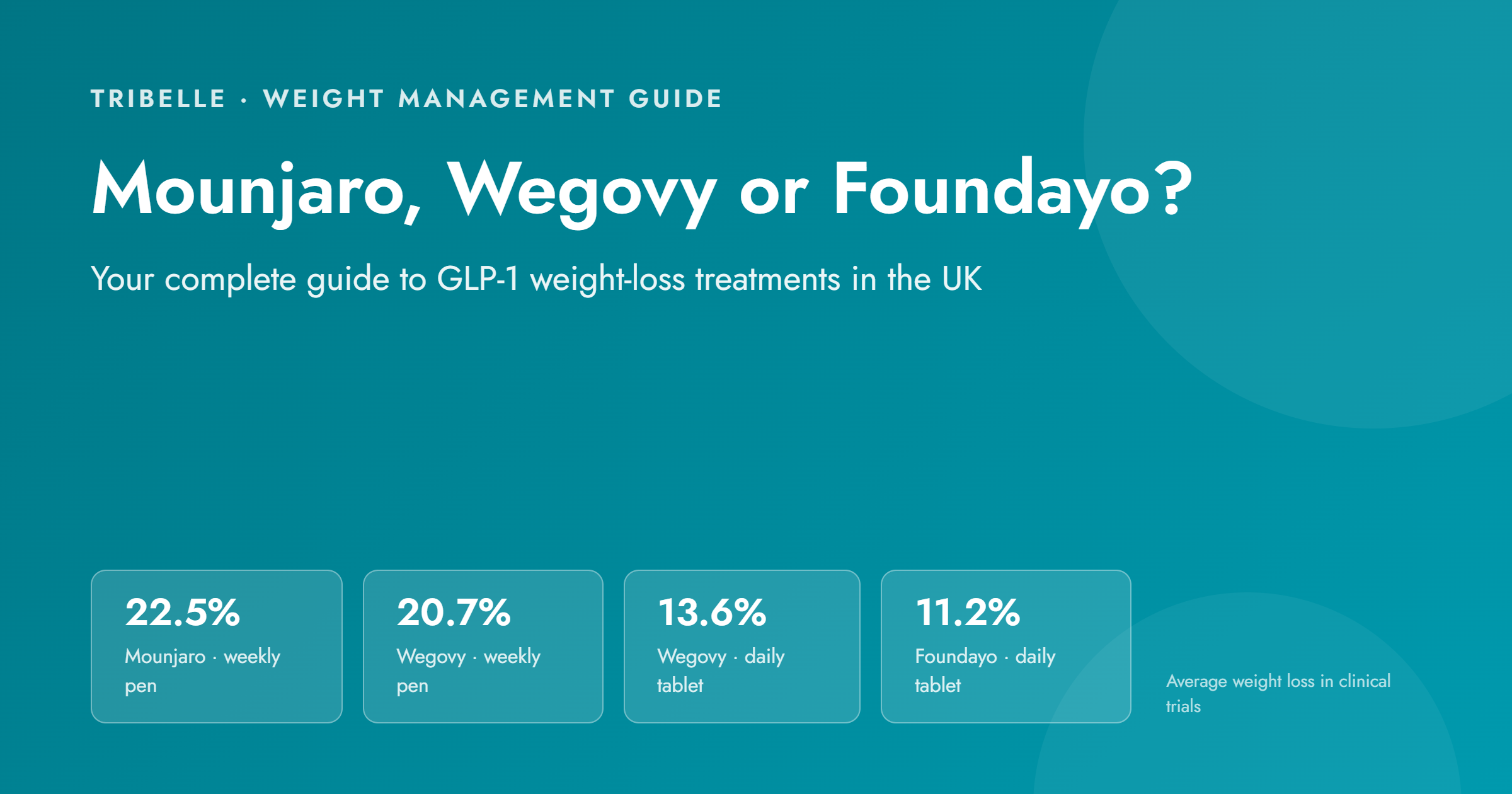
Weight loss varies depending on the medication, dose, medical history, lifestyle habits and consistency. Average clinical trial results show:
| →Mounjaro: some studies show 15-22% average weight loss |
| →Wegovy: around 15% body weight loss in many users |
| →Ozempic: primarily used for diabetes, but can also support weight loss |
Real-life results differ. Some people lose more, some less. The best results usually happen when medication is combined with protein-focused nutrition, strength training, good sleep, stress management, and ongoing support.
The most common side effects are digestive and often improve over time. These include:
| →Nausea |
| →Constipation |
| →Diarrhoea |
| →Bloating |
| →Reduced appetite |
| →Reflux |
| →Fatigue |
Less common but more serious side effects can include gallstones, pancreatitis, or dehydration. To reduce side effects: eat smaller meals, avoid greasy or heavy foods, stay hydrated, and increase doses slowly under supervision. Always seek medical advice if symptoms are severe or persistent.
Weight regain can happen after stopping GLP-1 medication, especially if the underlying drivers of weight gain remain. These medicines help control appetite and food noise while you take them. Once stopped, hunger signals may return. Long-term success often depends on building sustainable habits during treatment, including:
| →Nutrition routines |
| →Muscle-preserving exercise |
| →Sleep optimisation |
| →Stress management |
| →Ongoing medical review |
Some people remain weight-stable after stopping. Others need longer-term treatment, similar to other chronic health conditions.
Eligibility depends on the country, provider and your medical history. GLP-1 medications may be prescribed for adults with:
| →A BMI in the obesity range (over 30) |
| →A BMI in the overweight range (over 27) with weight-related conditions such as type 2 diabetes, sleep apnoea, or hypertension |
| →Difficulty losing weight despite structured attempts |
They are not suitable for everyone. Speak to TribElle to check your eligibility.
Obesity is not a personal failing — it's a chronic health condition. And now, for the first time in history, we have medications that really work.
✨ You deserve access to the best evidence-based care.
✨ You deserve to feel good in your body.
✨ You deserve support that's kind, not judgmental.
That's what we're here for at TribElle.
Supporting your body during weight loss treatment can make all the difference. From vitamins to collagen support, we've got you covered.
| GLP-1 Support Pack £25 |
| Perfectil Collagen Skin £39.99 |
| Perfectil Collagen Hair £39.99 |
Sources
| STEP 1 Trial: Semaglutide 2.4mg — NEJM |
| SURMOUNT-1 Trial: Tirzepatide — NEJM |
| NICE Guidelines: Wegovy |
| Obesity Journal: GLP-1s lifestyle outcomes |
© TribElle Health Ltd · GPhC Registration 9012688 · tribelle.co.uk · This content is for informational purposes only. Always consult a qualified healthcare professional.
Join the conversation
|
|||
|